Why a 7-Day “Decision Sprint” Costs ₹25,000
Stop treating research as a design fee. The Decision Validation Sprint is a 1% insurance premium on your manufacturing capital. Learn why the speed of the “No” is your most profitable asset.

Stop treating research as a design fee. The Decision Validation Sprint is a 1% insurance premium on your manufacturing capital. Learn why the speed of the “No” is your most profitable asset.
Most founders build on “performance” rather than behavior. The 3-Day Observation Test is a systematic risk audit that reveals real-world friction before you commit to ₹20L+ in tooling. Stop asking. Start watching.
User interviews don’t reveal real behavior—they capture what people say, not what they do. When founders build products on this gap, they don’t just risk failure—they lock assumptions into costly tooling, inventory, and capital loss.
You don’t understand your user until you observe their behavior under real-world constraints. Interviews and surveys capture stated preference, but only real-world struggle reveals actual behavior. In physical product development, ignoring this gap leads to costly design errors, tooling waste, and unsellable products. Most product teams are currently sitting on a mountain of “user data”…
Empathy in product design fails when emotional assumption replaces structured behavioral validation. Teams often mistake “feeling” a user’s pain for a validated business insight, leading to products that resonate in interviews but collapse in the market. In physical manufacturing, this isn’t just a design flaw—it’s a capital mistake that locks unverified assumptions into expensive tooling…
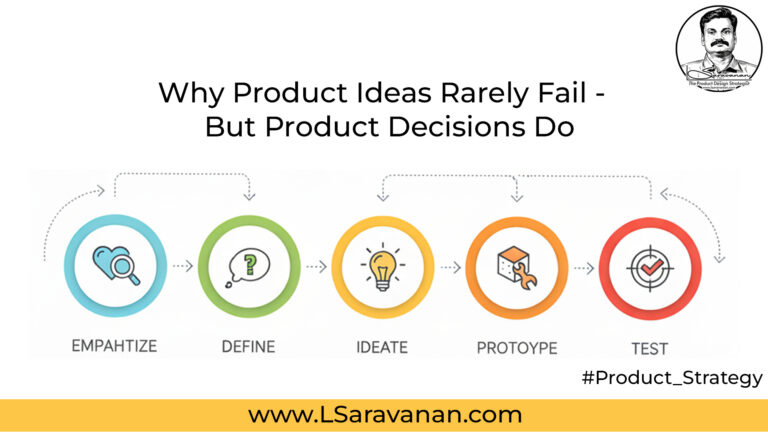
Most physical products don’t fail because the idea was wrong; they fail because of unexamined decisions made before production. Learn how to move from “decisions by default” to “decisions by design” using a framework focused on user specificity, problem urgency, and strategic sacrifice. Stop guessing and start building with clarity.
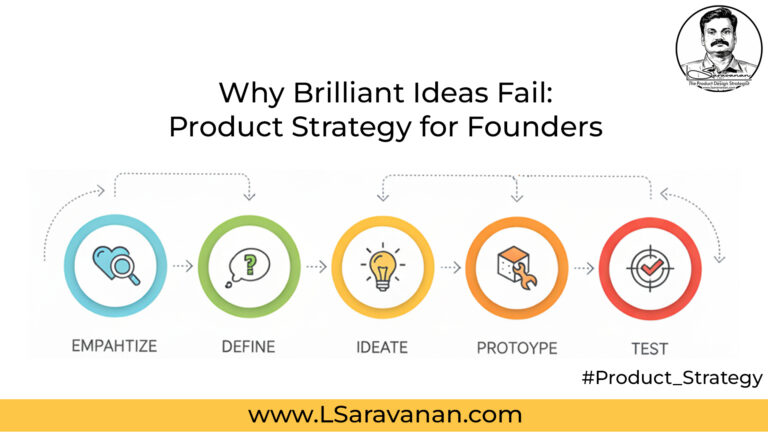
Building a technically impressive product is a liability if it solves an unvalidated problem. Explore why “The Solution Trap” is the leading cause of hardware startup failure and how to use a problem-first strategy to ensure your capital is an investment, not a gamble.
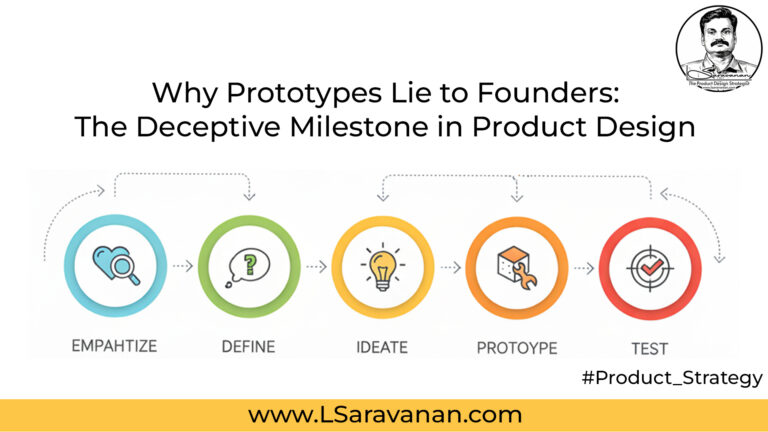
he first time you hold a working prototype, you are in immediate danger. While a “Hero Unit” proves a concept can be built, it often masks the brutal realities of mass manufacturing and unit economics. Learn how to dismantle the three strategic lies of prototyping and bridge the “Valley of Death” between the lab and the consumer’s hand.
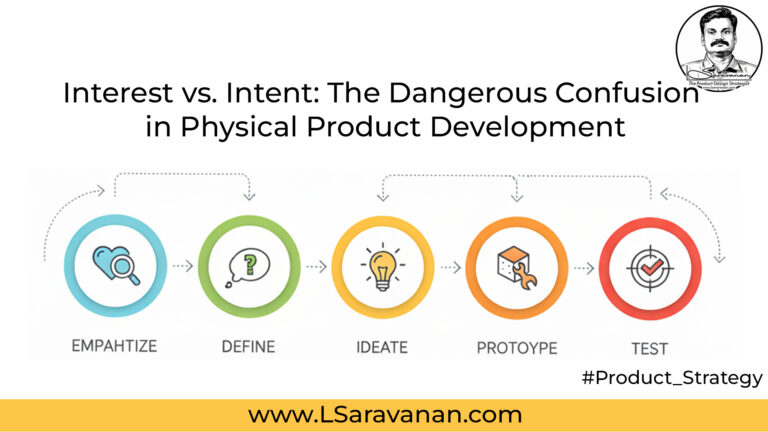
Most physical products don’t fail because they are poorly engineered. They fail because founders misread the signals before the first steel mold is ever cut. Interest is when people praise your product; intent is when they pay for it. Confusing the two is the most expensive mistake in physical product development — because manufacturing scales…
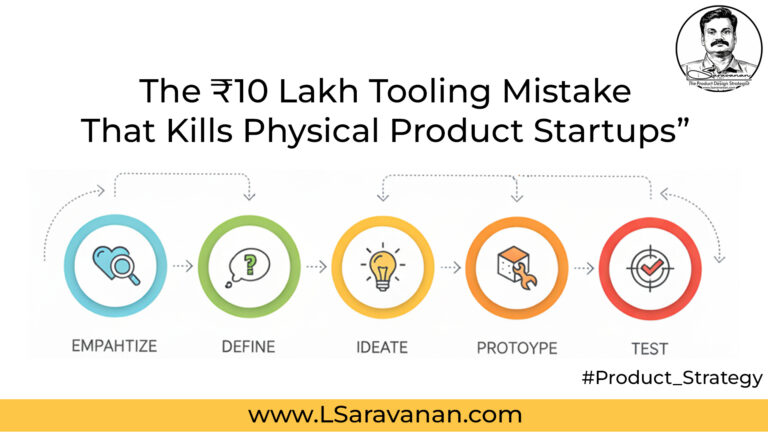
Tooling is not progress — it is a capital commitment that magnifies whatever assumptions you have already made. In physical product development, cutting a mold does not prove product–market fit; it locks in your design and your cash before the market has confirmed it wants the product. In hardware development, the most expensive sound isn’t…